 Foshan Xinliheng Edelstahl Co., Ltd.(佛山市鑫利恒不锈钢有限公司)

Edelstahl wird in der Präzisionselektronik weit verbreitet verwendet, wie zum Beispiel in Handyteilen, Präzisionsmaschinen, Elektronik, und Uhren. Diese Bereiche stellen extrem hohe Anforderungen an die Materialleistung. Edelstahl bietet eine breite Palette an Eigenschaften, die an verschiedene Bedingungen anpassbar sind, und eine Vielzahl von Anforderungen erfüllen können. Im Folgenden werden die Anwendungen von Edelstahl in diesen Bereichen beschrieben.
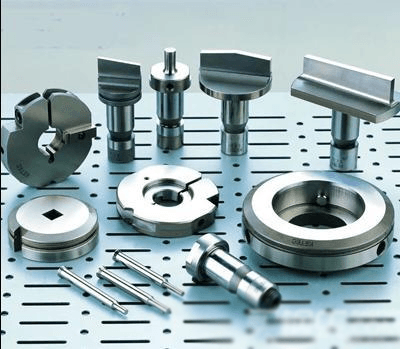
Edelstahl-Elektronikkomponenten
Leuchtstoffanzeiger-Röhren, die in Videorekordern und Armaturenbrettern von Autos zur Anzeige von Zeit und Geschwindigkeit verwendet werden, werden hergestellt, indem eine Glasgrundplatte mit einer Metallelektrode verbunden wird. Daher, es muss ein Metall mit einem dem Glas ähnlichen Wärmeausdehnungskoeffizienten verwendet werden, anderenfalls entstehen Risse an der Schnittstelle zwischen Glas und Metall. NAS 42-6/UNS K94760 stainless steel has a thermal expansion coefficient similar to that of glass from room temperature to high temperatures. This property makes it suitable for use as conductors in fluorescent display tubes.
Stainless Steel Precision Machinery Parts
Bimetallic materials are formed by bonding two metal plates with different thermal expansion coefficients. As the temperature changes, these materials bend toward the metal with the lower thermal expansion coefficient, a property that allows them to be used as temperature sensors.
Because of this property, bimetallic materials are widely used in home appliance thermostats and automatic switches, as well as car cigarette lighters and television picture tube brackets.
Stainless Steel Telephone Parts
These stainless steel parts are primarily used to make buzzers inside phones, home appliances, and office automation products. The sound source is a vibrating diaphragm formed by bonding a piezoelectric element to stainless steel. This diaphragm produces sound when it undergoes bending vibration. Bending vibration is achieved by a magnet generating a magnetic field that causes the diaphragm to vibrate up and down, creating sound. Daher, the vibrating diaphragm is made of soft magnetic materials such as NAS 42, NAS PB-N, and NAS 52.
Watch Parts
The stepping motor that accurately drives the second hand of an analog quartz watch is composed of precision components such as a stator, a drive coil, and a rotor. The drive coil is made by winding copper wire around an iron core made of soft magnetic permalloy, such as NAS PB-N or NAS PC. The stator is also made of soft magnetic permalloy. In watches, this drive coil and stator are combined to form an electromagnet that drives the rotor and keeps time.
Transformer Stainless Steel Parts
Transformers that supply alternating current (AC) consist of an iron core (the magnetic flux path) and coils. Silicon steel is the most typical iron core material. Small transformers for precision IT equipment, such as communications equipment, use iron cores that are sensitive and easily magnetized even in small magnetic fields. Examples include soft magnetic Permalloy materials like NAS PB-N, ASPC, and NAS PC-2.
Mobile Phone Stainless Steel Parts
NAS NM15M stainless steel offers excellent non-magnetic properties and strength, remaining non-magnetic even when twisted. This property not only ensures high strength to support ultra-thin housings, but also meets non-magnetic requirements without affecting the delicate electronic components within. It is now widely used in mobile phone cases and chassis.
Precision Astronomical Instruments
Astronomical telescopes are made of ultra-low thermal expansion materials. In ultra-large telescopes, enhancing the telescope’s resolution requires not only primary mirror manufacturing and polishing technologies, but also cutting-edge technologies such as precision drive technology for the telescope’s construction. The primary mirror is made of ultra-low thermal expansion glass. To ensure accurate tracking of celestial bodies and achieve the necessary star image resolution, the drive system’s errors must be minimized. Daher, niedrige thermische Ausdehnung Invar-Stahl NAS 36 /UNS K93600/DIN 1.3912 wird häufig als Trägermaterial des Primärspiegels verwendet.