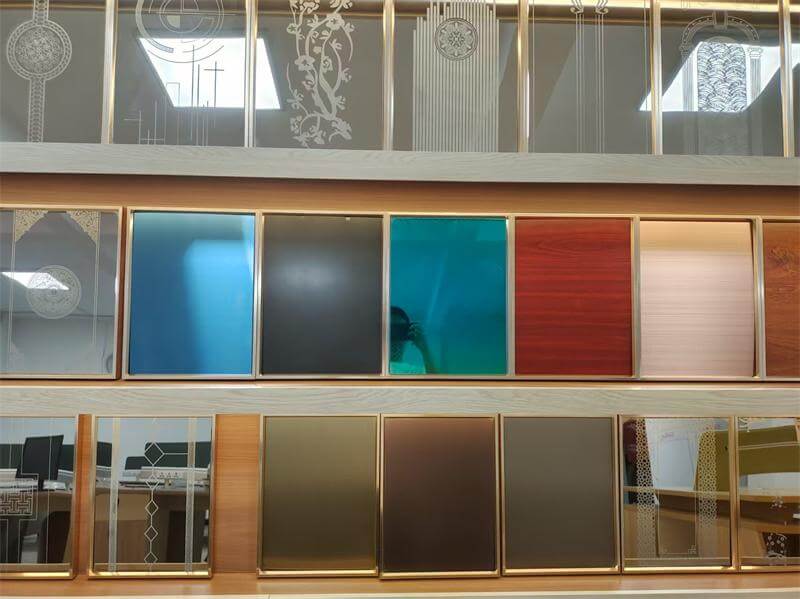
 Foshan Xinliheng A aço inoxidável Co., Ltd.(佛山市鑫利恒不锈钢有限公司)

O processo de fabrico de chapas de aço inoxidável coloridas é uma combinação sofisticada de metalurgia de precisão e tecnologias avançadas de tratamento de superfícies. O objetivo principal é conferir cores duradouras, esteticamente agradáveis, e diversificadas ao substrato de aço inoxidável enquanto se preservam as suas excelentes propriedades físicas e químicas, como resistência e resistência à corrosão. Foshan Xinliheng A aço inoxidável Co., Ltda., um processador profissional de aço inoxidável, emprega principalmente Deposição de vapor físico (PVD), o método dominante e tecnicamente maduro na indústria atualmente.
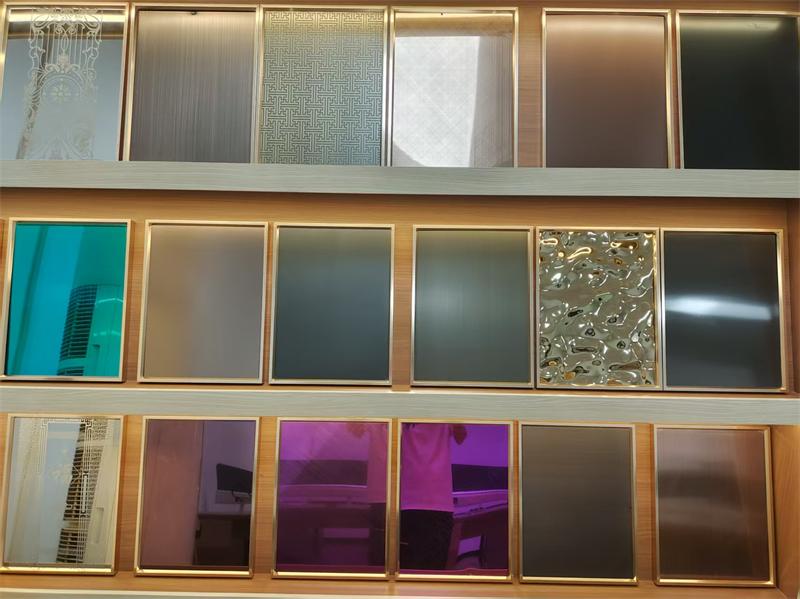
Abaixo está o processo típico de produção de chapas de aço inoxidável coloridas, focando na técnica PVD:
1. Preparação e Tratamento do Substrato
Esta etapa é crucial para garantir uma cor final uniforme e forte adesão do revestimento.
- Seleção de Matéria-Prima: São selecionadas bobinas ou chapas de aço inoxidável de alta qualidade como material base. Grau comum inclui 304 e 316, escolhidas com base na aplicação final.
- Corte/Decapagem: A bobina de aço inoxidável é nivelada e cortada em chapas planas com as dimensões necessárias.
- Pré-tratamento da superfície:
- Desengorduramento e Limpeza: A limpeza química ou ultrassónica é utilizada para remover completamente óleo, graxa, poeira, e outros contaminantes da superfície da chapa.
- Polimento da superfície: A superfície é processada para alcançar a textura base desejada, que determina o efeito visual final.
- Espelho (8K): Obtido através de moagem e polimento de alta precisão, resultando num acabamento espelhado.
- Linha do cabelo (Escovado): Criado por escovagem mecânica, produzindo uma textura linear uniforme.
- Satinado/No.4 (Matte): Formado pela projeção de partículas abrasivas, resultando num acabamento mate ou de areia fina uniforme.
- Gravado: Obtido através de gravação química ou a laser, creating specific patterns or textures on the surface.
2. Core Coloring Process – Deposição de vapor físico (PVD)
This is the central step where the colored coating is formed, typically carried out in a vacuum environment.
- Vacuum Coating: The pre-treated stainless steel sheet is placed into a large vacuum coating chamber, which is then evacuated to a high vacuum state.
- Evaporation/Sputtering: Inside the vacuum, the target metal (such as titanium, zircónio, cromo, or gold) or its compounds are heated via arc, electron beam, or magnetron sputtering until they evaporate or sputter.
- Ionization and Deposition: The evaporated or sputtered metal atoms react with introduced reactive gases (such as nitrogen N₂, oxygen O₂, or acetylene C₂H₂) in the vacuum, forming ions of metal compounds (por exemplo,, titanium nitride TiN, zirconium oxide ZrO₂, titanium carbide TiC). Under the influence of an electric field, these ions bombard and deposit uniformly onto the stainless steel surface, forming a dense, nanoscale-thin film with exceptional adhesion.
- Color Formation Principle: The color is determined by the thickness and composition of the deposited layer. This is not a pigment-based “inherent color,” but rather utilizes the principle of light interference. When light hits this thin film, part of the light reflects off the film’s surface, while another part passes through the film and reflects off the stainless steel substrate. These two reflected light waves interfere with each other. By precisely controlling the film’s thickness (typically tens to hundreds of nanometers), the wavelengths of light that are enhanced or diminished by interference can be regulated, resulting in different colors. Por exemplo:
- Titanium nitride (TiN) films of varying thicknesses can appear gold, champanhe, Rose Gold, or black.
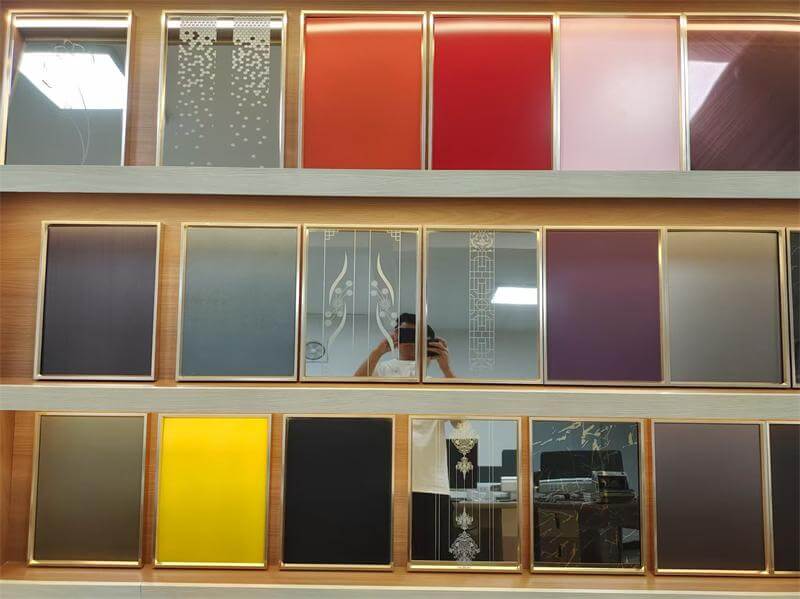
- Multi-layer deposition or adjusting the gas mixture can produce a wider range of colors, such as blue, green, purple, or iridescent effects.
3. Post-Processing and Quality Control
- Cooling: After coating, the sheets are slowly cooled to room temperature inside the vacuum chamber.
- Inspection: Rigorous quality checks are performed on the finished product, incluindo:
- Visual Inspection: Checking for color uniformity, color differences, arranhões, spots, or other defects.
- Performance Testing: Testing coating adhesion (por exemplo,, cross-cut test), abrasion resistance, resistência à corrosão (por exemplo,, salt spray test), and weatherability.
- Protective Film Application: To protect the delicate colored surface during transportation and fabrication, a protective film (PE film) is usually applied to the sheet’s surface.
- Packaging and Storage: The sheets are packaged according to customer requirements and then stored or shipped.
Other Coloring Methods (Supplementary Information)
While PVD is the dominant high-end process, other coloring methods exist in the market, though they are generally less common and may not match PVD in performance:
- Chemical Coloring: Immersing stainless steel in specific chemical solutions to generate oxide films of varying thicknesses through chemical reactions, which produce color. This method is lower in cost but offers limited color options and inferior durability and abrasion resistance.
- Electroplating: Depositing a layer of another metal (such as copper, níquel, or chromium) onto the stainless steel surface via electroplating to change its color. The process is well-established but faces environmental pressures, and the coating’s adhesion and corrosion resistance may be inferior to PVD.
- Spraying: Applying colored paint or powder coating to the surface. This is low-cost with a wide range of color choices, but the coating’s durability, abrasion resistance, and texture are significantly inferior to PVD, and there are risks of peeling and environmental concerns.
Resumo: Modern high-quality colored stainless steel sheets, especially those used in architectural decoration and high-end furniture, rely on the PVD vacuum coating process as their core manufacturing technique. This complex process demands high-precision equipment, controlled environments, and stringent process control. No entanto, it produces high-end decorative materials with vibrant, durável, wear-resistant, and environmentally friendly finishes. Professional companies like Xinliheng achieve market recognition for brands like “Haoliang” through their mastery of these processes and rigorous quality control.