 Foshan Xinliheng inossidabile acciaio Co., Ltd. (Foshan Xinliheng Acciaio Inossidabile Co., Ltd.)

Ricordo ancora il momento esatto in cui la mia percezione dell'acciaio inossidabile cambiò per sempre. Ero in un magazzino, circondato da pile di lamiere, la maggior parte di esse scintillava aggressivamente sotto le luci fluorescenti o era coperta da quel film protettivo blu onnipresente con “LASER-FILM” stampato sopra. Per curiosità, I grabbed a corner of the film on one particular sheet and peeled it back. What revealed itself wasn’t the cold, mirror-like surface I expected, nor was it the industrial grey of a factory floor. Invece, I was met with a soft, muted pale blue surface that seemed to absorb the light rather than reflect it. It looked… gentle. Not physically soft, ovviamente, but visually and tactility warm, like a surface brushed by morning mist. It felt more like high-end matte paint or fine sandpaper than metal. That was my first encounter with colored frosted stainless steel, and it completely dismantled my stereotype that stainless steel belongs only in hospital corridors, Cabine ascensori, or commercial kitchens.
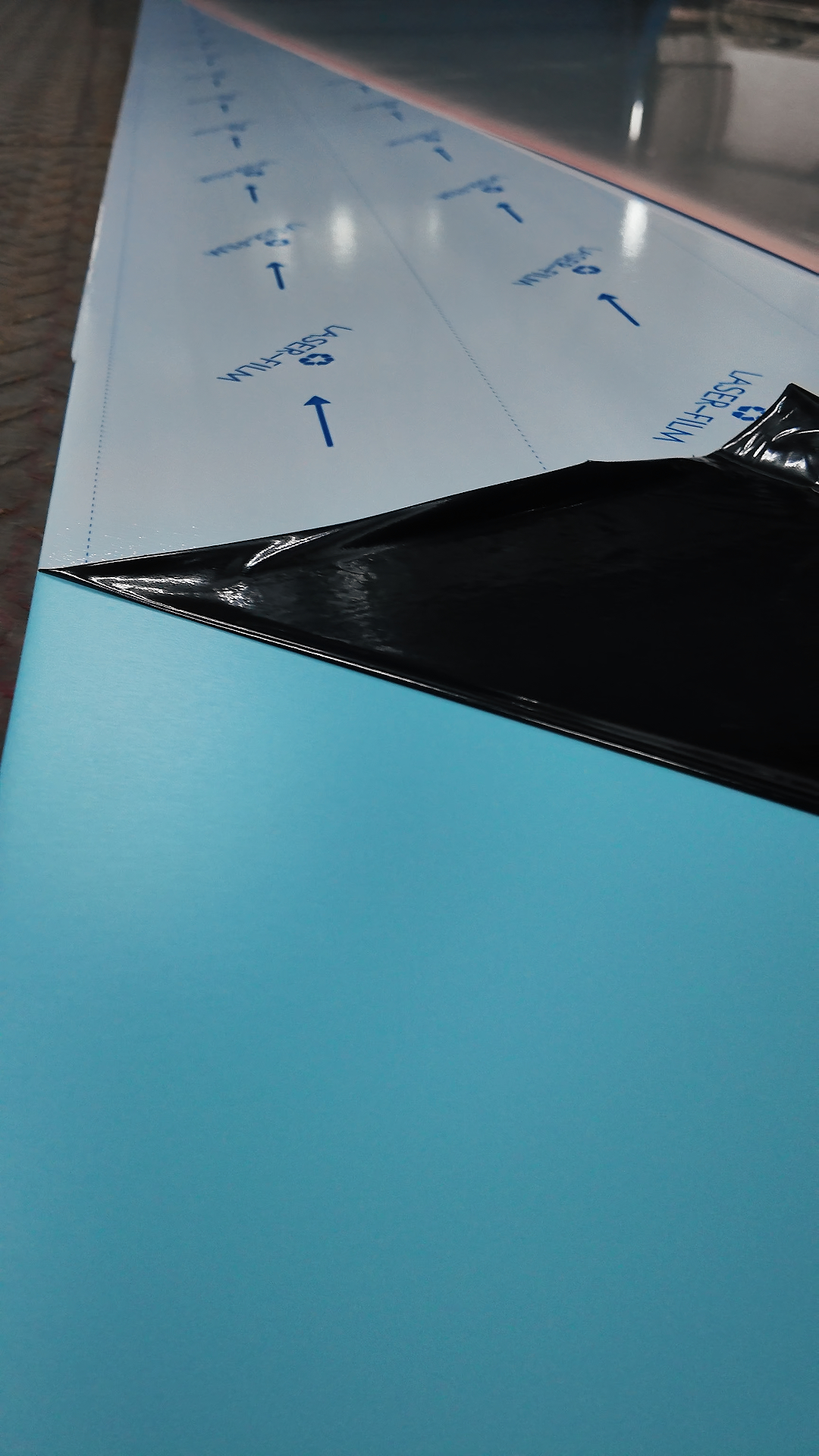
For years, the global market has treated stainless steel as a purely functional material: durevole, sì, but aesthetically limited to “shiny silver” O “brushed grey.” We’ve been told it’s hygienic, fire-resistant, and strong, but rarely have we been told it’s emotional or atmospheric. Yet, walking through recent architectural projects in Europe, boutique hotels in Asia, and luxury retail spaces in the Middle East, a quiet revolution is happening. Designers are increasingly turning away from volatile organic compound (VOC)-heavy paints and fragile wallpapers, opting instead for colored frosted stainless steel. They’ve realized that metal doesn’t have to shout; it can whisper. It can be the quiet, sophisticated backdrop that lets the rest of the design breathe.
The magic lies in the finish. The term “glassato” O “satinata” refers to a specific surface treatment where the metal undergoes a precise abrasive process to create microscopic peaks and valleys. This texture scatters light diffusely, eliminating the harsh glare and mirror reflections that make traditional stainless steel feel so clinical. When you combine this texture with color—achieved not by painting, but through advanced Physical Vapor Deposition (Pvd) coating technology—the result is stunning. PVD involves depositing thin layers of metal ions onto the stainless steel substrate in a vacuum chamber. Unlike paint, which sits on top and can chip, non si sfoglierà, or fade, the PVD layer becomes an integral part of the metal’s surface. The colors available today are incredibly nuanced: think Champagne Gold, Oro rosa, Slate Grey, Smoky Blue, Antique Bronze, and even deep Emerald Green. These aren’t the garish, neon hues of the past; they are low-saturation, earth-toned palettes that mimic natural materials like stone, aged copper, or ocean fog.
From a practical standpoint, especially for international buyers and specifiers, the advantages are overwhelming. Let’s talk about the nightmare of maintenance. Anyone who has specified mirror-finish stainless steel knows the struggle: it is a fingerprint magnet. A single touch leaves a visible mark; a splash of water dries into a spot; a slight scratch catches the light and ruins the illusion of perfection. In high-traffic areas like hotel lobbies, airport terminals, or busy family homes, this is a dealbreaker. Colored frosted stainless steel solves this elegantly. The textured surface naturally camouflages fingerprints, smudges, and minor abrasions. Light hits the micro-irregularities and bounces off in all directions, effectively hiding the daily wear and tear that would be glaringly obvious on a smooth surface. For facility managers and homeowners alike, this translates to significantly lower cleaning costs and less frequent polishing. A simple wipe with a damp cloth and a neutral detergent is often all that’s needed to restore its pristine look.
Durability is another pillar where this material shines. Because the color is bonded at a molecular level via PVD, it offers exceptional resistance to corrosion, UV radiation, and abrasion. Whether installed in the humid coastal climates of Southeast Asia, the freezing winters of Northern Europe, or the arid heat of the Middle East, colored frosted stainless steel remains stable. It does not rust (provided it’s 304 O 316 grado), it does not fade under sunlight, and it does not warp with temperature fluctuations. Compare this to wood veneers that might delaminate, paints that crack, or laminates that bubble in humidity, and the value proposition becomes clear. It is a “install and forget” material with a lifecycle that can easily span decades, making it a sustainable choice in an era where longevity is a key metric of eco-friendly design.
Tuttavia, sourcing and specifying this material requires a keen eye. Not all “colored stainless steel” is created equal. The market is flooded with cheaper alternatives that use electroplating or simple painting methods, which lack the durability and depth of true PVD coating. As an importer or designer, you must verify the grade of the base steel (always insist on SUS304 for interiors and SUS316 for exteriors or coastal areas) and the thickness of the PVD layer. A high-quality PVD coating should pass rigorous salt spray tests and adhesion tests without flaking. Inoltre, consistency is key. In large projects, batch-to-batch color variation can be a disaster. Reputable manufacturers utilize computer-controlled vacuum chambers to ensure that the “Smoky Blue” ordered in January matches perfectly with the shipment arriving in June. Always request physical samples before committing to a bulk order. Look at the sample under different lighting conditions—natural daylight, warm indoor light, and cool LED light—to see how the color shifts and interacts with the environment.
Installation also demands a level of expertise that goes beyond standard metalworking. While the material itself is robust, the aesthetic appeal relies heavily on precision. The direction of the grain (IL “hairline” of the frost) must be consistent across all panels; otherwise, the wall will look patchy and disjointed under light. Seams and joints need to be handled with surgical precision. Unlike painted walls where touch-ups can hide mistakes, metal reveals every imperfection. This is why working with experienced fabricators and installers is non-negotiable. They understand how to handle the protective film (which usually comes in blue, bianco, or laser-printed varieties to indicate the grain direction), how to cut without burning the edges, and how to clean the surface post-installation without leaving streaks.
The versatility of colored frosted stainless steel is perhaps its most compelling feature. It bridges the gap between the industrial and the luxurious. In a minimalist Scandinavian living room, a panel of frosted matte white stainless steel can replace traditional plaster, adding a subtle metallic sheen that catches the low winter sun without being blinding. In a high-end jewelry store, frosted black stainless steel provides a dramatic, velvet-like backdrop that makes diamonds pop. In corporate offices, frosted bronze partitions offer privacy while maintaining an airy, open feel, avoiding the heaviness of drywall or the transparency of glass. It adapts to the style of the space rather than dictating it. It can be embossed with patterns for added texture, perforated for acoustic control, or bent into complex curves for sculptural installations.
There is also a psychological aspect to consider. Interior design is increasingly focused on wellness and biophilic principles. Harsh, reflective surfaces can cause visual fatigue and stress. Morbido, diffused surfaces promote calmness. Colored frosted stainless steel, with its light-scattering properties and warm, naturalistic color palette, contributes to a serene atmosphere. It feels solid and grounding, offering a sense of security, yet its softness prevents it from feeling imposing. It’s a material that invites touch. People want to run their hands over it, a reaction rarely elicited by cold, shiny metal or sterile white paint.
As we look toward the future of construction and interior design, the demand for materials that combine aesthetics, performance, and sustainability will only grow. Colored frosted stainless steel checks every box. It reduces the need for frequent renovations, minimizes chemical cleaning agents, and offers a timeless look that doesn’t succumb to fleeting trends. For architects, designer, and distributors looking to differentiate their offerings, this material represents a significant opportunity. It’s no longer just about covering a wall; it’s about creating an experience.
So, the next time you are specifying materials for a project, don’t dismiss stainless steel as too cold or too industrial. Peel back the blue film, look closer at the frosted textures, and explore the spectrum of PVD colors. You might find that this “new” old material is exactly what your project needs to elevate it from ordinary to extraordinary. It’s not just a sheet of metal; it’s a canvas for light, shadow, and human connection. The era of the “cold” stainless steel is over; welcome to the age of the温柔 (gentle) metal.
A Note to Global Partners:
If you are sourcing this material for your next project, remember that the devil is in the details. Chiedere report di prova, verify the PVD process, and never compromise on the base steel grade. The difference between a good supplier and a great one isn’t just price—it’s consistency, technical support, and the ability to deliver a vision that lasts. Let’s build spaces that don’t just look good today, but stand the test of time.
If you are sourcing this material for your next project, remember that the devil is in the details. Chiedere report di prova, verify the PVD process, and never compromise on the base steel grade. The difference between a good supplier and a great one isn’t just price—it’s consistency, technical support, and the ability to deliver a vision that lasts. Let’s build spaces that don’t just look good today, but stand the test of time.
