 Foshan Xinliheng Stainless Steel Co., Ltd.(佛山市鑫利恒不锈钢有限公司)

(Your customers often face rework due to wrong material/thickness choices? This article helps them select accurately, covering core application scenarios)
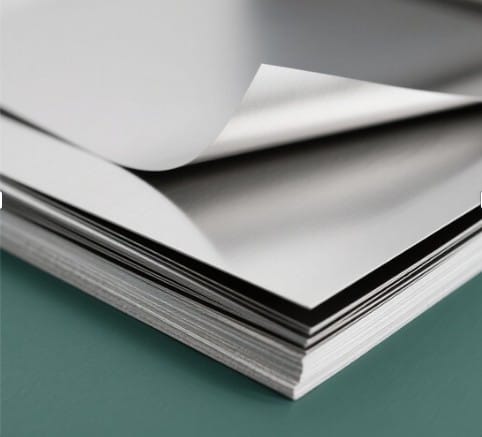
I. Why Choosing the Wrong Stainless Steel Thin Sheet Costs You Money
- Real Case: A European food equipment factory used 304 thin sheets (instead of 316), and had to replace parts due to corrosion after 6 months, resulting in losses exceeding $12,000;
- Core Procurement Dilemma: “Low-cost materials are not durable” vs. “High-cost materials exceed budget” — making the right choice reduces after-sales costs by 50%.
II. 3 Key Factors to Pick the Perfect Stainless Steel Thin Sheet
- Material Selection: 304 vs 316 vs 430 (Which Fits Your Needs?)
|
Material
|
Corrosion Resistance
|
Applicable Industries
|
Cost Level
|
|
304
|
Medium (resists daily oxidation)
|
Architectural decoration, home appliance parts
|
Budget-friendly
|
|
316
|
High (resists acid, alkali, seawater)
|
Food equipment, medical devices, chemical industry
|
Mid-to-high end
|
|
430
|
Basic (easy to clean)
|
Kitchen appliance panels, automotive interiors
|
Low-cost
|
|
Tip: For scenarios involving food/liquid contact, 316 is a must (compliant with FDA/EC 1935 standards); 304 is preferred for outdoor decoration.
|
- Thickness Matters: 0.1mm-2.0mm, Which Thickness to Choose?
-
- Ultra-thin (0.1-0.5mm): Suitable for precision parts (e.g., automotive sensor housings). Confirm the supplier’s “tolerance control capability” (recommended ≤±0.02mm);
-
- Regular (0.6-1.2mm): Universal scenarios (e.g., equipment housings, shelf boards) with the best cost-performance;
-
- Thick (1.3-2.0mm): For load-bearing needs (e.g., mechanical bases), paired with “bending/welding services”.
- Surface Finish: Brushed vs Mirror vs Matte (Affects Both Use & Aesthetics)
-
- Brushed: Fingerprint-resistant, ideal for kitchen appliances/home electronics;
-
- Mirror: High reflectivity, used for decorative panels;
-
- Matte: Scratch-resistant, first choice for industrial equipment.
III. Your Free Stainless Steel Thin Sheet Selection Checklist
- Clarify application scenarios (contact medium/environment) → Lock in material;
- Calculate load-bearing/processing needs → Determine thickness;
- Request “material test reports (SGS/ISO)” + “sample testing (e.g., salt spray test)” from suppliers;
- Confirm minimum order quantity (MOQ) and delivery cycle (recommend factories with MOQ ≤500kg for flexible small-batch orders).
Call to Action
👉 Download our full 《Stainless Steel Thin Sheet Technical Specification Manual》 (with 10 industry application drawings) by filling in your email on our website.
👉 Need a custom quote for 304/316 thin sheets? Click here to send your requirements (we reply within 8 hours).
