 Foshan Xinliheng Inoxydnus Steel Co., Ltd. (佛山市鑫利恒不锈钢有限公司)

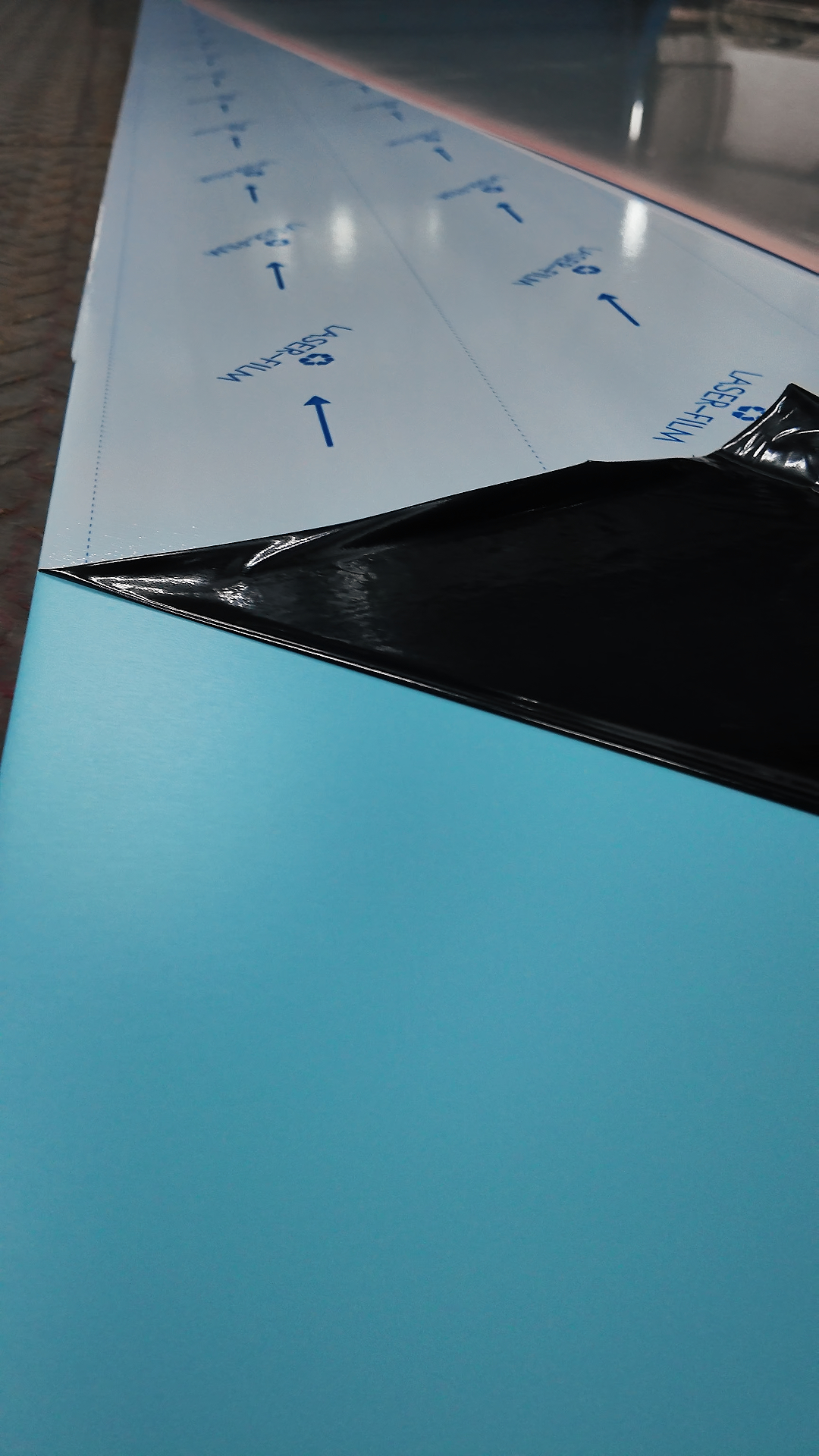
I still remember the exact moment my perception of stainless steel shifted forever. I was in a warehouse, surrounded by stacks of metal sheets, most of them gleaming aggressively under the fluorescent lights or covered in that ubiquitous blue protective film with “LASER-FILM” printed on it. Out of curiosity, I grabbed a corner of the film on one particular sheet and peeled it back. What revealed itself wasn’t the cold, mirror-like surface I expected, nor was it the industrial grey of a factory floor. Instead, I was met with a soft, muted pale blue surface that seemed to absorb the light rather than reflect it. It looked… gentle. Not physically soft, of course, but visually and tactility warm, like a surface brushed by morning mist. It felt more like high-end matte paint or fine sandpaper than metal. That was my first encounter with colored frosted stainless steel, and it completely dismantled my stereotype that stainless steel belongs only in hospital corridors, cabines d'ascenseur, or commercial kitchens.
For years, the global market has treated stainless steel as a purely functional material: durable, yes, but aesthetically limited to “shiny silver” ou “brushed grey.” We’ve been told it’s hygienic, fire-resistant, and strong, but rarely have we been told it’s emotional or atmospheric. Yet, walking through recent architectural projects in Europe, boutique hotels in Asia, and luxury retail spaces in the Middle East, a quiet revolution is happening. Designers are increasingly turning away from volatile organic compound (VOC)-heavy paints and fragile wallpapers, opting instead for colored frosted stainless steel. They’ve realized that metal doesn’t have to shout; it can whisper. It can be the quiet, sophisticated backdrop that lets the rest of the design breathe.
The magic lies in the finish. The term “Givré” ou “satiné” refers to a specific surface treatment where the metal undergoes a precise abrasive process to create microscopic peaks and valleys. This texture scatters light diffusely, eliminating the harsh glare and mirror reflections that make traditional stainless steel feel so clinical. When you combine this texture with color—achieved not by painting, but through advanced Physical Vapor Deposition (PVD) coating technology—the result is stunning. PVD involves depositing thin layers of metal ions onto the stainless steel substrate in a vacuum chamber. Unlike paint, which sits on top and can chip, peel, or fade, la couche PVD devient une partie intégrante de la surface du métal. Les couleurs disponibles aujourd'hui sont incroyablement subtiles: pensez au Or Champagne, Or rose, Gris Ardoise, Bleu Fumée, Bronze Antique, et même Vert Émeraude profond. Ce ne sont pas les teintes criardes, néon du passé; ce sont des palettes à faible saturation, aux tons terreux qui imitent les matériaux naturels comme la pierre, le cuivre vieilli, ou le brouillard océanique.
D'un point de vue pratique, surtout pour les acheteurs et spécificateurs internationaux, les avantages sont écrasants. Parlons du cauchemar de l'entretien. Quiconque a spécifié de l'acier inoxydable à finition miroir connaît la lutte: c'est un aimant à empreintes digitales. Un simple toucher laisse une marque visible; une éclaboussure d'eau sèche en laissant une tache; une légère rayure attrape la lumière et ruine l'illusion de perfection. Dans les zones à fort passage comme les halls d'hôtels, les terminaux d'aéroport, or busy family homes, this is a dealbreaker. Colored frosted stainless steel solves this elegantly. The textured surface naturally camouflages fingerprints, smudges, and minor abrasions. Light hits the micro-irregularities and bounces off in all directions, effectively hiding the daily wear and tear that would be glaringly obvious on a smooth surface. For facility managers and homeowners alike, this translates to significantly lower cleaning costs and less frequent polishing. A simple wipe with a damp cloth and a neutral detergent is often all that’s needed to restore its pristine look.
Durability is another pillar where this material shines. Because the color is bonded at a molecular level via PVD, it offers exceptional resistance to corrosion, UV radiation, and abrasion. Whether installed in the humid coastal climates of Southeast Asia, the freezing winters of Northern Europe, or the arid heat of the Middle East, colored frosted stainless steel remains stable. It does not rust (provided it’s 304 ou 316 grade), it does not fade under sunlight, and it does not warp with temperature fluctuations. Compare this to wood veneers that might delaminate, paints that crack, or laminates that bubble in humidity, and the value proposition becomes clear. It is a “install and forget” material with a lifecycle that can easily span decades, making it a sustainable choice in an era where longevity is a key metric of eco-friendly design.
Cependant, sourcing and specifying this material requires a keen eye. Not all “l’acier inoxydable coloré” is created equal. The market is flooded with cheaper alternatives that use electroplating or simple painting methods, qui manquent de la durabilité et de la profondeur d'un véritable revêtement PVD. En tant qu'importateur ou designer, vous devez vérifier la qualité de l'acier de base (insistez toujours sur le SUS304 pour les intérieurs et le SUS316 pour les extérieurs ou les zones côtières) et l'épaisseur de la couche PVD. Un revêtement PVD de haute qualité doit passer des tests rigoureux de brouillard salin et des tests d'adhérence sans s'écailler. De plus, la constance est essentielle. Dans les grands projets, la variation de couleur d'un lot à l'autre peut être un désastre. Les fabricants réputés utilisent des chambres à vide contrôlées par ordinateur pour s'assurer que le “Bleu Fumée” commandé en janvier correspond parfaitement à la livraison arrivant en juin. Demandez toujours des échantillons physiques avant de vous engager sur une commande en gros. Examinez l'échantillon sous différents éclairages — lumière naturelle du jour, lumière intérieure chaude, and cool LED light—to see how the color shifts and interacts with the environment.
Installation also demands a level of expertise that goes beyond standard metalworking. While the material itself is robust, the aesthetic appeal relies heavily on precision. The direction of the grain (le “naissance des cheveux” of the frost) must be consistent across all panels; otherwise, the wall will look patchy and disjointed under light. Seams and joints need to be handled with surgical precision. Unlike painted walls where touch-ups can hide mistakes, metal reveals every imperfection. This is why working with experienced fabricators and installers is non-negotiable. They understand how to handle the protective film (which usually comes in blue, white, or laser-printed varieties to indicate the grain direction), how to cut without burning the edges, et comment nettoyer la surface après l'installation sans laisser de traces.
La polyvalence de l'acier inoxydable coloré mat est peut-être sa caractéristique la plus attrayante. Il comble le fossé entre l'industriel et le luxueux. Dans un salon scandinave minimaliste, un panneau en acier inoxydable blanc mat dépoli peut remplacer le plâtre traditionnel, ajoutant un éclat métallique subtil qui capte le faible soleil d'hiver sans être éblouissant. Dans une bijouterie haut de gamme, l'acier inoxydable noir dépoli offre un arrière-plan dramatique, velouté qui fait ressortir les diamants. Dans les bureaux d'entreprise, les cloisons en bronze dépoli offrent de l'intimité tout en conservant une sensation aérée, ouverte, évitant la lourdeur du placo ou la transparence du verre. Il s'adapte au style de l'espace plutôt que de le dicter. It can be embossed with patterns for added texture, perforated for acoustic control, or bent into complex curves for sculptural installations.
There is also a psychological aspect to consider. Interior design is increasingly focused on wellness and biophilic principles. Harsh, reflective surfaces can cause visual fatigue and stress. Doux, diffused surfaces promote calmness. Colored frosted stainless steel, with its light-scattering properties and warm, naturalistic color palette, contributes to a serene atmosphere. It feels solid and grounding, offering a sense of security, yet its softness prevents it from feeling imposing. It’s a material that invites touch. People want to run their hands over it, a reaction rarely elicited by cold, shiny metal or sterile white paint.
As we look toward the future of construction and interior design, the demand for materials that combine aesthetics, performance, and sustainability will only grow. Colored frosted stainless steel checks every box. It reduces the need for frequent renovations, minimizes chemical cleaning agents, and offers a timeless look that doesn’t succumb to fleeting trends. For architects, créateurs, and distributors looking to differentiate their offerings, this material represents a significant opportunity. It’s no longer just about covering a wall; it’s about creating an experience.
So, the next time you are specifying materials for a project, don’t dismiss stainless steel as too cold or too industrial. Peel back the blue film, look closer at the frosted textures, and explore the spectrum of PVD colors. You might find that this “new” Le vieux matériau est exactement ce dont votre projet a besoin pour passer de l'ordinaire à l'extraordinaire. Ce n'est pas juste une feuille de métal; c'est une toile pour la lumière, l'ombre, et la connexion humaine. L'ère du “froid” acier inoxydable est terminée; bienvenue à l'ère du 温柔 (métal) doux.
Une note aux partenaires mondiaux:
Si vous vous approvisionnez en ce matériau pour votre prochain projet, rappelez-vous que le diable est dans les détails. Demandez des rapports de test, vérifiez le processus PVD, et ne jamais compromettre la qualité de l'acier de base. La différence entre un bon fournisseur et un excellent n'est pas seulement le prix—c'est la constance, assistance technique, et la capacité à réaliser une vision qui dure. Construisons des espaces qui ne se contentent pas d'être beaux aujourd'hui, mais qui résistent à l'épreuve du temps.
Si vous vous approvisionnez en ce matériau pour votre prochain projet, rappelez-vous que le diable est dans les détails. Demandez des rapports de test, vérifiez le processus PVD, et ne jamais compromettre la qualité de l'acier de base. La différence entre un bon fournisseur et un excellent n'est pas seulement le prix—c'est la constance, assistance technique, et la capacité à réaliser une vision qui dure. Construisons des espaces qui ne se contentent pas d'être beaux aujourd'hui, mais qui résistent à l'épreuve du temps.
